The refund window attaches to this desk
Buying here puts your order with the desk that answers +1 (877) 257-0710 and applies the 60-day window. An order placed somewhere else is somebody else's policy and we cannot help with it.
NeuroMind Pro is a dietary supplement capsule for daily focus and a clear mind, sold through the NeuroMind Pro official website. It is for adults with busy days; take one vegetable capsule a day, with 30 capsules to a bottle. Three B vitamins support normal energy use, and a 151 mg blend of caffeine, tyrosine, theacrine, theobromine, bacopa, rhodiola and huperzine A supports alertness. The price is shown at checkout, and the 60-day guarantee runs from purchase.


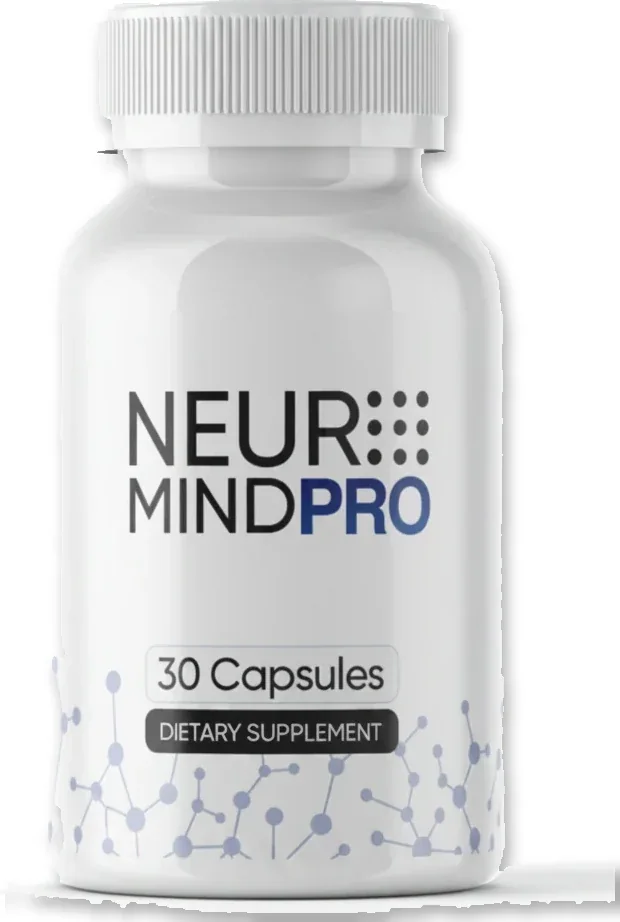


Every line below is read off the printed label or the brief we were given. Where nothing was published, the row says so rather than guessing.
| Detail | What the label and the seller say |
|---|---|
| Product | NeuroMind Pro, a cognitive-support supplement in vegetable capsules |
| Front of bottle | NEURMINDPRO · 30 Capsules · Dietary Supplement. No claim of any kind |
| Supplement Facts panel | Three amounts printed, seven withheld. Serving size, servings per container and the vitamins are complete; the blend is a single total |
| Serving | One capsule daily. No time of day given |
| Servings per bottle | 30. A bottle is exactly thirty days |
| Declared amounts | Three. Vitamin B1 6 mg, vitamin B6 8.5 mg, vitamin B12 24 mcg |
| Proprietary blend | 151 mg, holding seven ingredients with no individual amounts |
| Stimulants | Three. Caffeine, theacrine and theobromine, none of them quantified |
| Standardisations | Two of seven. Bacopa at 20% bacosides, huperzia at 1% huperzine A |
| Other ingredients | Rice flour, hypromellose (vegetable capsule), magnesium stearate, silicon dioxide |
| Caution panel | Present and properly worded. Under-18s, pregnancy, nursing, medication, medical conditions |
| Storage | Cool, dry, below 30°C (86°F). One instruction, both scales |
| FDA disclaimer | Present and boxed, carrying an asterisk that points at nothing |
| Distributed by | Neuromind Pro, Aurora, CO 80011, USA. No street address |
| Manufacturer | Not named anywhere on the label |
| Price | Not published to us. Shown at checkout |
| Guarantee | 60 days from purchase unless the sales page prints a longer window |
| Returns | 437 Madison Avenue, Floor 24, New York, NY 10022. Buyer pays return shipping |
| Order desk | +1 (877) 257-0710, or [email protected] |
| Verified reviews | None. The supplied block is marked as layout copy in its own document |
NeuroMind Pro is one capsule a day carrying three B vitamins with printed amounts — thiamine 6 mg, pyridoxine 8.5 mg, methylcobalamin 24 mcg, all three percentages correct against the FDA Daily Values — and a 151 milligram proprietary blend holding seven more ingredients with no amounts at all. The front of the bottle makes no claim whatsoever, which is the best label behaviour this desk has seen. The panel is the opposite. Because 21 CFR 101.36(c) requires the ingredients in a blend to be listed in descending order of predominance by weight, the order is a fact you can do arithmetic with: caffeine is first, so it is the largest ingredient and could be up to 151 mg; bacopa is fifth, so it is at most 30.2 mg against the 300 to 450 mg a day used in the trials; huperzia serrata is seventh, so at 1% huperzine A the ceiling is 216 micrograms — which lands inside the range used in studies of an acetylcholinesterase inhibitor. Every figure on this site marked ≤ is the most that can be there, never the amount that is.
Ordering here puts your order on the desk that answers +1 (877) 257-0710 and applies the 60-day window to it. Price is whatever the checkout prints; we publish no figure we have not seen.
Three vitamins are printed. Nobody buys a nootropic for 6 mg of thiamine.
The Supplement Facts panel has two halves. The top half declares vitamin B1, vitamin B6 and vitamin B12 with amounts and percentages, and we have checked all three: they are correct. The bottom half is one line — Proprietary Blend, 151 mg, † — followed by seven ingredient names and nothing else.
Those seven are caffeine from green coffee bean, L-tyrosine, theacrine, theobromine, bacopa monnieri extract standardised to 20% bacosides, rhodiola rosea root, and huperzia serrata extract standardised to 1% huperzine A. Every single thing this product is sold for is in that line, and not one of them carries a number.
This is legal. 21 CFR 101.36(c) permits a blend to declare one total weight, and asks only that the ingredients inside it be listed in descending order of predominance by weight. Our criticism is not that the label breaks a rule. It is that the rule lets a label tell you almost nothing, and this one takes the offer.
But descending order is itself a mathematical statement, and it is the one lever a buyer has. If ingredients are listed heaviest first, then the ingredient in position n cannot be more than the total divided by n — because if it were, everything above it would have to be smaller, and the order would be wrong.
So in a 151 mg blend: the second ingredient is at most 75.5 mg. The third, at most 50.3 mg. The fifth, at most 30.2 mg. The seventh, at most 21.6 mg. Those are the ceilings printed throughout this site, and they are arithmetic rather than estimates.
One thing they are not is doses. The rule sets an upper bound and no lower bound whatsoever. The bacopa could be 30.2 mg or it could be half a milligram, and everything the label prints would still be true. Every comparison on this site is therefore the kindest possible reading of the product.
It means at most. Wherever you see it, the real amount is that figure or anything below it, down to a trace. We use it because it is the only honest way to write about a label that publishes no amounts, and we would drop it immediately if the panel printed the numbers.
Pick an ingredient. Because every amount here is a ceiling, every figure below is a floor — at least this many capsules, and more if the true amount is lower.
The label says one capsule a day. Nothing here is a recommendation, and taking handfuls of capsules is emphatically not one. These figures are the studied dose divided by the most that can be in a capsule, which makes every one of them a floor: the true number is this or higher, and the label gives no way to find out which.


A dietary supplement in hypromellose capsules, thirty to a bottle. The instruction is one sentence: as a dietary supplement, take one (1) capsule daily. No time of day is given, which on a capsule whose largest blend ingredient is caffeine is the one piece of timing advice worth printing.
One capsule is one serving and there are thirty servings in a bottle, so a bottle is exactly thirty days. Every amount on the panel is what one capsule delivers, which at least means nothing has to be multiplied before it is compared with a study.
The formula is a B-vitamin base plus a nootropic and stimulant blend. Three of the seven blend ingredients are methylxanthines — caffeine, theacrine and theobromine. Two are botanicals with a real cognitive literature, bacopa and rhodiola. One is an amino acid, tyrosine. And one, huperzia serrata standardised to 1% huperzine A, is an acetylcholinesterase inhibitor with a documented interaction list.
The combination is an ordinary one for this category. What distinguishes this particular label is the pairing of a front panel that claims nothing at all with a facts panel that discloses nothing at all.
Three practical reasons, none of them a claim about the product.
Buying here puts your order with the desk that answers +1 (877) 257-0710 and applies the 60-day window. An order placed somewhere else is somebody else's policy and we cannot help with it.
Seven ingredients, seven upper bounds, each one worked out from the 151 mg total and the position it occupies in the list. That is on this page, not behind a link.
At most 216 micrograms, which sits inside the 50 to 200 mcg twice-daily range used in studies of an acetylcholinesterase inhibitor. On the same page as the buy button.
Tab through them. The parts this label does properly are real and worth crediting — and none of them is the part that matters most.
Suggested Use: As a dietary supplement, take one (1) capsule daily.
One capsule is one serving and there are thirty in a bottle, so a bottle is exactly thirty days. Every amount on the panel is what one capsule delivers.
Proprietary Blend — 151 mg — †, followed by seven names and no figures.
This is not a detail. The three vitamins are the only declared amounts on the panel, and nobody buys a nootropic for 6 mg of thiamine. Everything this product is sold for is inside the blend, and none of it carries a number.
21 CFR 101.36(c) requires the ingredients in a blend to be listed in descending order of predominance by weight. That is a mathematical statement, and it is the only arithmetic a blend permits.
The ingredient in position n cannot exceed the total divided by n. So the bacopa, fifth of seven in 151 mg, cannot be more than 30.2 mg. It could be far less. There is no lower bound at all.
We recalculated all three. B1 at 6 mg against a 1.2 mg Daily Value is 500%, printed as 500. B6 at 8.5 mg against 1.7 mg is 500%, printed as 500. B12 at 24 mcg against 2.4 mcg is 1000%, printed as 1000.
Three for three, and worth crediting. It is also the only part of this panel where checking is possible.
Caffeine, theacrine and theobromine are all methylxanthines, all in the blend, and none carries an amount.
Caffeine is listed first, so it is the largest single ingredient by weight in the blend — anywhere from about 22 mg to 151 mg. A buyer counting toward the FDA's 400 mg a day cannot even start.
Other Ingredients: Rice Flour, Hypromellose (Vegetable Capsule), Magnesium Stearate, Silicon Dioxide.
All four are ordinary manufacturing materials and all four are disclosed, which is how it should be. They are worth a note only because the listing carries a 100% Natural Ingredients roundel.
Three declared vitamins with their amounts, then the seven blend ingredients with the ceiling each one's position allows — arithmetic we did ourselves.
| As printed on the panel | Amount per 2-capsule serving | % Daily Value |
|---|---|---|
| Vitamin B1 (as Thiamine HCL) | 6 mg | 500% |
| Vitamin B6 (from Pyridoxine HCL) | 8.5 mg | 500% |
| Vitamin B12 (as Methylcobalamin) | 24 mcg | 1000% |
| Caffeine from Green Coffee (Coffea arabica) Bean | ≤ 151 mg | Daily Value not established |
| L-Tyrosine | ≤ 75.5 mg | Daily Value not established |
| Theacrine | ≤ 50.3 mg | Daily Value not established |
| Theobromine | ≤ 37.8 mg | Daily Value not established |
| Bacopa monnieri Whole Plant Extract 20% Bacosides A&B | ≤ 30.2 mg | Daily Value not established |
| Rhodiola (Rhodiola rosea) Root | ≤ 25.2 mg | Daily Value not established |
| Huperzia serrata Whole Herb Extract 1% Huperzine-A | ≤ 21.6 mg | Daily Value not established |
There is no proprietary blend. Ten dietary ingredients are declared and every one of them carries a figure. That is the only time this desk has been able to write that sentence about a product, and it is why the rest of this site can do arithmetic instead of guessing.
The footnote**Percent Daily Values are based on a 2,000 calorie diet. †Daily Value not established.
Other ingredientsRice Flour, Hypromellose (Vegetable Capsule), Magnesium Stearate, Silicon Dioxide.
Marks printed on the label itselfNon-GMO · Soy Free · Lab Tested. The Soy Free mark is a real allergen statement. There is no shellfish statement, and glucosamine is commonly manufactured from shellfish.
Every claim below is sourced to the reference list at the foot of this page, and every one of those sources was opened and read.
Listed first, so by the descending-order rule it is the largest ingredient in the blend by weight. The FDA cites 400 mg a day as the figure not generally associated with dangerous negative effects in healthy adults, and puts a 12-ounce coffee at 113 to 247 mg. This capsule contains somewhere between roughly 22 mg and 151 mg, and there is no way to narrow it.
The clinical literature doses tyrosine by body weight: 100 to 150 mg per kilogram a day, which is seven to ten grams for a 70 kg adult. Even the amounts manufacturers typically recommend are 500 to 1,500 mg. The ceiling here is 75.5 mg.
The trial we read used 200 mg in fifteen subjects and called its own findings preliminary. Four times the most that can be in this capsule, from research its authors describe as a starting point.
The best-evidenced cognitive ingredient in the blend, and the widest gap. Six randomised trials used 300 to 450 mg of extract a day over twelve weeks. Three hundred milligrams is twice the entire 151 mg blend.
The federal centre for research on this exact category says there is not enough reliable evidence to determine whether rhodiola is useful for any health-related purpose, and that most human research is of low-to-moderate quality.
The 1% standardisation on the Huperzia extract makes this the one blend ingredient whose ceiling can be computed in micrograms. Studies use 50 to 200 mcg twice daily. The ceiling sits inside that range — which means this capsule may well deliver a pharmacologically meaningful dose of an acetylcholinesterase inhibitor without printing the number.
See the full Supplement Facts panel for every line on the label.
One linear scale, and every bar is a ceiling rather than a dose. Read the last two rows differently from the first three.
The most this capsule can containWhat the research usedA ceiling, not a targetper 1-capsule serving, one linear scale
Not one ingredient in this blend has a printed amount, so not one bar on this chart is a dose. Each one is the most that can be present, calculated from the 151 mg total and the position the ingredient occupies in the descending-order list. The real amount could be any fraction of it, because the rule sets an upper bound and no lower bound whatsoever. That is the honest way to draw this label, and it is why every bar carries a hard edge instead of a value.
Scroll or use the arrows. Three vitamins, seven blend ingredients in descending order of weight, then the shell.
151 mg · seven ingredients
One weight, seven names, and not a single individual amount. Under 21 CFR 101.36(c) that is entirely legal: a blend declares its total and lists its ingredients in descending order of predominance by weight. It is also the whole of what this product is for — the three vitamins are the only amounts on the panel, and they are not why anybody buys a nootropic.
1st of 7 · ceiling 151 mg
First in the blend, which by the descending-order rule makes it the largest ingredient by weight. The amount is not stated anywhere. The FDA cites 400 mg a day as the figure not generally associated with dangerous negative effects in healthy adults; this capsule contains somewhere between about 22 mg and 151 mg of caffeine, and the label will not tell you where in that range.
2nd of 7 · ceiling 75.5 mg
An amino acid studied for cognition under stress. The clinical literature uses <b>100 to 150 mg per kilogram of body weight</b> — seven to ten grams for a 70 kg adult — and even the amounts manufacturers typically recommend run 500 to 1,500 mg. The absolute most that can be in this capsule is 75.5 mg.
3rd of 7 · ceiling 50.3 mg
A purine alkaloid related to caffeine. The pilot trial we read used <b>200 mg</b>, reported significant improvements in energy and reductions in fatigue in fifteen subjects, and described its own findings as preliminary. Four times the ceiling here.
4th of 7 · ceiling 37.8 mg
The alkaloid that makes chocolate mildly stimulating, and the third methylxanthine in this capsule after caffeine and theacrine. None of the three has a printed amount, so the combined stimulant load cannot be worked out from the label.
5th of 7 · ceiling 30.2 mg
The ingredient with the best cognitive evidence in this blend, and the clearest arithmetic problem. The systematic review we read covered six randomised trials using <b>300 to 450 mg of extract a day for twelve weeks</b>. Three hundred milligrams is twice the entire blend, and ten times the most that can be here.
6th of 7 · ceiling 25.2 mg
NCCIH is blunt: “There isn't enough reliable evidence to determine whether rhodiola or its components are useful for any health-related purpose”, and “most of the research in people is of low-to-moderate quality”. It is possibly safe for up to twelve weeks. Trials typically use a few hundred milligrams.
7th of 7 · ceiling 216 mcg
The one that deserves the most attention. Huperzine A is an <b>acetylcholinesterase inhibitor</b> — the same mechanism as prescription Alzheimer's drugs. Studies have used 50 to 200 mcg twice daily. At 1% of a maximum 21.6 mg of extract, the ceiling here is 216 mcg, which sits inside that range. The actual amount is not published.
the only printed amounts
6 mg of thiamine, 8.5 mg of pyridoxine and 24 mcg of methylcobalamin. All three percentages are correct against the FDA's Daily Values, which we recalculated. All three are far below the tolerable upper intake levels where those exist.
four excipients
Rice flour, hypromellose (vegetable capsule), magnesium stearate, silicon dioxide. All ordinary, all disclosed. The hypromellose shell is what makes the vegetarian mark on the listing checkable against the label.
Fourteen markers across the three panels. Tap any of them.
Swipe the label sideways to reach every marker.
Tap a numbered marker on the label to read what that line says, and what it leaves out.
This is the marketing photograph supplied with the product. The bottle stands in front of a ginkgo leaf, a lion's mane mushroom, a scatter of blueberries and sprigs of rosemary and thyme.
Not one of those appears on the Supplement Facts panel.
The panel lists three B vitamins and a 151 mg blend of caffeine from green coffee, L-tyrosine, theacrine, theobromine, bacopa monnieri, rhodiola rosea and huperzia serrata. There is no ginkgo in this capsule, no lion's mane, no blueberry extract and no herb.
This is worth more than the usual complaint that photographs are not ingredients, because ginkgo biloba and lion's mane are two of the best-known nootropic ingredients there are. They are not garnish chosen for the colour. They are the two things a shopper browsing this category is most likely to recognise, arranged around a bottle that contains neither.
We are not suggesting the capsule contains them. The panel governs, and we follow the panel throughout this site. What we are saying is that somebody assembling the artwork reached for the props that signal brain supplement rather than for the things in the bottle.
Because it arrived with the product, and cropping out the inconvenient part of a pack would be its own kind of dishonesty. It is on this page with the props named, and it is on our conflicts page alongside the other thing this pack contains that is not this product.

On most products in this aisle these panels carry the benefit claims that the Supplement Facts box cannot support: energy, stamina, vitality, confidence, each with an asterisk. They are where a label goes to promise things.
Both of this brand’s panels decline to. They are navigation, pointing back at the formula, the facts panel, the directions and the format. The recurring instruction across both is Follow Label Directions.
That leaves the entire promise of this product resting on two words printed on the front of the bottle, which is what the cards below are about.
The only substantive claim in the material supplied to us, and it is not on the bottle — it comes from the sales page. As structure-function wording it is correctly built: cognition and clarity are normal processes, <i>support</i> is the permitted verb, and no disease is named. What sits behind it is a 151 mg blend of seven ingredients with no individual amounts, where the best-evidenced ingredient is studied at twice the weight of the whole blend. The claim is permitted. The evidence for it at these amounts is not available, because the amounts are not published.
Worth stating as its own entry, because it is the best thing on this label. <i>NEURMINDPRO. 30 Capsules. DIETARY SUPPLEMENT.</i> No focus claim, no energy claim, no icons, no “clinically studied”. After a long run of labels crowded with unverifiable structure-function wording, a front panel that says only what the product is deserves to be credited. It is also why the asterisk on the FDA disclaimer has nothing to point at.
<i>Natural</i> has no regulatory definition for a dietary supplement. The panel declares thiamine hydrochloride, pyridoxine hydrochloride, methylcobalamin, caffeine and several standardised extracts — all ordinary, all disclosed, and all manufactured. The roundel conveys a feeling rather than a specification.
No doctor is named anywhere: not on the label, not on the listing, not in any document we were given. There is no photograph and no credential. We will not invent a formulator, so this claim remains exactly as unverifiable as it arrived.
True as an administrative fact and routinely misread as an endorsement. The FDA “does not have the authority to approve dietary supplements before they are marketed”. Registration means the facility filed with the agency. It is not an inspection result, and no facility or registration number is given here to check.
Good Manufacturing Practice governs how a product is made, recorded, traced and kept clean. It says nothing about what is in the capsule: a GMP-compliant factory can fill a capsule with a blend that discloses none of its amounts, because disclosing them is not a GMP question. No certifying body is named.
Four sourcing and suitability marks. The vegetarian one checks out against the label, because the capsule shell is declared as hypromellose. Nothing on the ingredient list is a gluten grain or a dairy ingredient, so those two are consistent with the panel as well, though no testing and no certifying body is named for either. Non-GMO is a claim about raw materials with nothing supplied behind it.
The correctly qualified country-of-origin construction, and we credit it. The FTC reserves an unqualified Made in USA claim for products that are “all or virtually all” made in the United States. This badge does not make that claim. Its companion badge in the same pack — the one that reads MANUFACTURE IN twice around the ring — tries to and fails to finish the sentence.
The only claim here with a number behind it: 60 days from purchase, per the brief, unless the sales page prints a longer window. A purchase policy, not a medical promise, and it is the claim a buyer can actually act on.
Front of the card: what it is and the ceiling this capsule allows. Tap it over for the named source, including the parts that do not flatter the product.
Both arrived in the asset pack supplied for NeuroMind Pro. Both are published here with what they actually show.

The share card is the one we would call a real problem rather than a curiosity. It is the image a link to this site would carry into a feed, and it advertises a blood-sugar tincture from a different brand — with support misspelled on it. We have used it on this page and nowhere else.
We spend most of our time criticising labels. This part deserves the opposite.
Here is the entire front panel of this bottle: NEURMINDPRO, a dot-matrix mark, 30 Capsules, DIETARY SUPPLEMENT.
That is all of it. No supports focus. No clinically studied. No promotes mental clarity. No row of icons, no asterisked structure-function wording, no percentage graphic, no doctor formulated. Nothing.
After a long run of products whose front panels carry four or five unverifiable claims apiece, a bottle that says only what it is comes as a genuine surprise, and we would rather say so plainly than bury it in a pros list. A label that claims nothing cannot mislead you about anything.
It has one consequence worth noting. The boxed FDA disclaimer on the other panel begins with an asterisk — *These statements have not been evaluated… — and normally that asterisk ties back to starred claims on the front. With no claims to star, the asterisk points at nothing at all. A template leftover, and the most harmless error we have found on any label.
The cognitive-support wording does exist, but it is on the sales page rather than the bottle. That distinction matters: the regulated surface of this product is silent, and the marketing surface is not.
A silent front panel and a silent facts panel are two different virtues, and only one of them is a virtue. This bottle makes no promises and also gives you no numbers, which means the thing it is quiet about is the thing you most need to know.
Twelve marks, published as supplied, with what each one does and does not establish.
Two of the twelve can be checked against the label: the vegetarian mark, which holds up because the shell is hypromellose, and the qualified foreign and domestic ingredients mark, which is the correct construction. One of the twelve is printed wrong. The rest name no certifying body and supply no certificate.
The two columns of this card have rarely been further apart. The label's manners are excellent and its disclosure is close to nil.
The front panel makes no claim at all. No focus promise, no clarity promise, no icons, no asterisked structure-function wording. If you have spent any time reading supplement labels you will recognise how unusual that is, and it is the single best feature of this product.
Six milligrams of thiamine, 8.5 mg of pyridoxine and 24 micrograms of methylcobalamin, at 500%, 500% and 1000% of the FDA Daily Values. We recalculated all three and all three are right. They are also comfortably below the upper intake level where one exists.
Caffeine is first in a 151 mg blend, so it is the largest ingredient by weight. Somewhere between roughly 22 mg and 151 mg, with theacrine and theobromine alongside it. If a mild unmeasured lift is what you are after, that is what this capsule most reliably delivers.
One capsule daily. Store below 30°C. A caution panel covering under-18s, pregnancy, nursing, medication and medical conditions. Each of those is short, specific and unambiguous, which is more than several labels on this desk have managed.
A phone number and an email are printed on the bottle itself, and the desk selling it publishes a second number, two New York addresses and a 60-day window. Not every product reviewed here gives you a way to reach anybody.
The shell is declared as hypromellose, which is plant-derived, and nothing else on the panel is obviously animal-sourced. The vegetarian mark on the listing is one of the few badges here that can be checked against the label and holds up.
Then the arithmetic is decisive. The six randomised trials in the review we read used 300 to 450 mg of extract a day for twelve weeks. Bacopa is fifth of seven in a 151 mg blend, so it cannot be more than 30.2 mg here — and it could be far less, because descending order sets a ceiling and no floor at all.
This is the serious one. Huperzine A is an acetylcholinesterase inhibitor, with listed moderate interactions with anticholinergic drugs, with Alzheimer medications such as donepezil and tacrine, and with cholinergic glaucoma medicines. L-Tyrosine is contraindicated with MAOIs. Rhodiola has a reported interaction with losartan. None of the three has a printed amount, so nobody — including your pharmacist — can work out how much of any of them you would be taking.
All six appear in the huperzine A monograph as conditions in which it should be avoided, and the amount in this capsule is not published. The label's own caution panel tells anyone with a medical condition to consult a physician first. Take the panel with you.
Caffeine is the largest single ingredient in the blend and its amount is not stated. The FDA's figure is 400 mg a day for healthy adults, and you cannot add an unknown to your own total. There is also no smaller dose available: it is one capsule, and the label says do not exceed it.
The label excludes both plainly, and the huperzine A monograph adds pregnancy and breastfeeding to its own avoid list. That is an exclusion rather than a hedge, and we would follow it.
This is the general case. Seven ingredients, one number, no amounts. Everything on this site that looks like a dose is a ceiling we calculated from the order the ingredients are printed in, because that is the only information the label provides. If you want a nootropic whose amounts you can set beside the research, this is not that bottle.
Nothing you answer leaves your browser. Two of the five are about interactions, and that is deliberate.
0 of 5 answered
Everything here is sourced. Nothing here is medical advice, and none of it replaces the clinician or pharmacist who knows what else you take.
Begin with the label, because it does this part well. The caution panel is printed and properly worded: Do not exceed recommended dose. Not for use for those under the age of 18 or pregnant or nursing mothers. Consult with a physician prior to use especially if you are taking a medication or have a medical condition. On this formula that last clause is doing more work than the person who printed it may have realised.
The huperzine A. This is the one that matters most, and the one the label quantifies least. Huperzine A is described in the monograph we read as a substance purified from Chinese club moss that acts as an acetylcholinesterase inhibitor and “causes an increase in the levels of acetylcholine” — the same broad mechanism as prescription Alzheimer's medicines. Studies have used 50 to 200 mcg twice daily. The most that can be in this capsule is 216 mcg, which is inside that range.
The same source lists the conditions in which it should be avoided: slow heart rate and heart disease, epilepsy, gastrointestinal blockage and peptic ulcers, asthma and emphysema, urinary obstruction, and pregnancy or breastfeeding. It lists moderate interactions with anticholinergic drugs, with Alzheimer medications including donepezil and tacrine, and with cholinergic medicines used for glaucoma. It describes huperzine A as possibly safe for short periods of less than three months. None of that can be weighed properly without the amount, and the amount is not printed.
The stimulants. Caffeine is first in the blend, so it is the largest ingredient by weight — up to 151 mg, though it could be far less. The FDA cites 400 mg a day as the figure not generally associated with dangerous negative effects in healthy adults, and puts a 12-ounce coffee at 113 to 247 mg. Theacrine and theobromine sit alongside it, also unquantified. You cannot add an unknown to your own daily total, and there is no smaller dose available: it is one capsule, and the panel says do not exceed it.
The tyrosine. Two cautions in the monograph we read, both worth knowing regardless of amount. It “is contraindicated in hyperthyroidism or Graves disease because it may increase levels of thyroid hormone”, and “coadministration of tyrosine and monoamine oxidase inhibitors (MAOIs) is contraindicated”.
The rhodiola. NCCIH describes it as possibly safe for up to twelve weeks, with dizziness, headache, insomnia and either dry mouth or excess saliva among reported side effects, and notes a reported interaction with losartan.
The vitamins. The reassuring part. No upper limit has been set for thiamin or for B12, and the one for vitamin B6 is 100 mg a day against 8.5 mg here. The neuropathy that makes B6 worth watching is associated with 1 to 6 grams a day for 12 to 40 months, which is hundreds of times this capsule.
Print the huperzine A figure. Not the whole blend, not every ingredient — just that one number, in micrograms, so that a pharmacist looking at a patient on donepezil or a cholinergic glaucoma drop can do their job. It would cost nothing and it would change this product's safety profile from unknowable to checkable.
The middle column is not a dose. It is the largest amount the descending-order rule permits, given a 151 mg total and the position the ingredient occupies. The real figure is that or lower, with no floor at all.
| Ingredient, in panel order | The most it can be | What the research used |
|---|---|---|
| 1. Caffeine from green coffee | ≤ 151 mg | 400 mg/day is a ceiling, not a target — up to 38% of it in one capsule |
| 2. L-Tyrosine | ≤ 75.5 mg | 100–150 mg/kg per day in studies; 500–1,500 mg commonly recommended |
| 3. Theacrine | ≤ 50.3 mg | 200 mg in the pilot trial — at least four times this |
| 4. Theobromine | ≤ 37.8 mg | No dose we have a source for. The third methylxanthine in the capsule |
| 5. Bacopa monnieri extract | ≤ 30.2 mg | 300–450 mg/day for 12 weeks — the lowest studied dose is twice the whole blend |
| 6. Rhodiola rosea root | ≤ 25.2 mg | Not enough reliable evidence to determine usefulness for any health-related purpose |
| 7. Huperzia serrata, 1% huperzine A | ≤ 21.6 mg, so ≤ 216 mcg huperzine A | 50–200 mcg twice daily — the ceiling lands inside the studied range |
| The whole blend | 151 mg of seven ingredients | — |
Four steps. Two are the label's own words, and two are ours — marked as such, because the label does not print them and we think it should.
From the panel: serving size, 1 capsule; servings per container, 30. The caution panel adds: do not exceed the recommended dose.
Ours, not the label's. The label gives no time of day. Caffeine is the largest ingredient in the blend and theacrine and theobromine are in there with it, so an evening capsule is a decision about your sleep that nobody has warned you you are making.
Also ours. Three ingredients here carry documented interaction cautions and none of them has a printed amount. A photograph of the panel is the most useful thing you can hand over.
The label's own instruction, with the temperature in both scales. One instruction, no contradictions, nothing to interpret.
The method behind every ceiling on this site, written out once so you can check it yourself.
21 CFR 101.36(c) says that when ingredients are declared as a proprietary blend, the total weight must be printed and the ingredients inside it must be listed in descending order of predominance by weight. Nothing else is required.
Most people read that as a formatting rule. It is actually a constraint, and it can be turned into arithmetic in one line.
Suppose the ingredient in position n were heavier than the total divided by n. Then all n ingredients at or above it in the list would also have to be at least that heavy, because the list is in descending order. That would make the first n ingredients alone weigh more than the total, which is impossible. So the ingredient in position n is at most the total divided by n.
Apply it to 151 mg. Position 1: at most 151. Position 2: at most 75.5. Position 3: at most 50.3. Position 4: at most 37.75. Position 5: at most 30.2. Position 6: at most 25.17. Position 7: at most 21.57.
Then use the standardisations where they exist. The huperzia serrata extract is 1% huperzine A, so at most 21.57 mg of extract is at most 0.216 mg — 216 micrograms — of huperzine A. The bacopa extract is 20% bacosides, so at most 30.2 mg of extract is at most 6 mg of bacosides.
That is the whole method. It needs no assumptions about the formula, no insider information and no charity toward the manufacturer, and it produces the kindest numbers the label permits. If a company disputes a ceiling on this site, there is exactly one way to settle it: print the amount.
It cannot produce a floor. There is no arrangement of the rules that puts a lower bound on any ingredient in a blend, which is why a blend can legally contain a visible dusting of an expensive ingredient and a great deal of a cheap one. We assume the best case throughout, and the best case is still what you see on the chart above.
One capsule a day is the label's serving and the planner is fixed to it. Change the pack size to see where a bottle lands against the 60-day guarantee.
Pack size
Capsules a day — fixed at two, because the label states a serving size


No price was published to us. We print no figure we have not seen ourselves. · Returns run on the listing’s window, not a seller guarantee · What that actually means
No price was published. The denominator, unusually, needs no assumptions.
No price was published to us and we print none. Pack prices are whatever the info page shows at checkout, which is the single largest gap in the buying decision and the reason price clarity scores 1.5 out of 5 on our card.
But the denominator is free of assumptions. One capsule a day, thirty capsules a bottle, thirty days. No serving-size guesswork, no range.
So the moment a pack price appears, the cost per day finishes itself: divide by 30 for one bottle, 60 for two, 90 for three, 180 for six. Write that number down before you decide, because a per-day figure is the only form in which two supplements can honestly be compared.
There is a second comparison worth making on this product specifically, and it is uncomfortable. You cannot compare this against anything on ingredient cost, because you do not know what is in it. A competing nootropic that prints 300 mg of bacopa and 200 mcg of huperzine A can be priced per milligram of active. This one can only be priced per capsule, and the capsule's contents are a range 151 mg wide.
Four things worth knowing before you buy any nootropic, from any brand.
A proprietary blend is a decision not to tell you. There is a legitimate trade-secret argument for it, and there is also the fact that a blend hides how little of an expensive ingredient a formula contains. Both are true at once, and no label tells you which applies. When you are comparing two nootropics, the one that prints its amounts has made a choice the other one declined to make.
Read the order, not just the list. Descending order of predominance by weight is a real constraint and it is the only lever a buyer has. If the ingredient you care about is near the end of a small blend, you already know it cannot be at a studied dose, whatever the front of the bottle implies.
Watch for the stimulants. A great many products in this category contain caffeine from a named botanical source rather than as caffeine anhydrous, which makes it easy to miss. Green coffee, green tea, guarana, yerba mate, kola nut, theacrine and theobromine are all worth counting. If a label lists any of them and prints no caffeine figure, you do not know what you are taking.
The FDA does not approve any of it in advance. Its own words: “FDA does not have the authority to approve dietary supplements before they are marketed.” Manufacturers and distributors carry the initial responsibility for safety and for substantiating claims. A registered-facility badge means a factory filed a registration.
Take these four paragraphs to the next nootropic you pick up, whoever makes it. Find the blend total, count the position of the ingredient you are buying it for, and divide. If the answer is far below what the research used, the front of the bottle cannot fix it.
myneuromind.com, the U.S. stocking partner for NeuroMind. Your order goes to the desk that answers +1 (877) 257-0710, with the 60-day window attached and an order ID that desk can look up.
We cannot see the order, refund it, or tell you anything about storage or handling in a third-party chain. The other seller's policy is the only one that applies.
Check any price offered that way against the checkout here before entering a card. We do not send price emails and we never paste tracking or affiliate links into our pages.
The material supplied with NeuroMind Pro does contain a review block: a star score, a count of written reviews, a count of orders, a recommendation percentage and eight named buyers with ages, cities, pack sizes and day counts.
Its own source note says, in as many words, that the reviews, star scores and order counts in that pack are layout copy only — placeholder content for designing a page, not feedback from people who bought this product.
So we do not print it. Not as reviews, not as a rating in the header, not as an order count, and not as a “% would recommend” figure. Publishing invented testimonials is the one thing this desk will not do, whatever it costs in conversion.
Individual experiences, collected after purchase, attributable to an order, and published unedited including the bad ones. Where we have had one on this desk, we have printed it in full and said who supplied it.
A number with no verifiable set behind it is decoration. Any site can print 4.7 out of 5. What you can check is the label, and the label pages on this site are where the evidence actually is.
Write to [email protected]. We will publish what people actually send us, good and bad, marked as unverified, and we will say how many we have. Until then this page stays as it is.
Twenty-one files arrived with this product and twenty-one are published here, which has not been true of every review on this desk. There are no photographs of identifiable people presented as customers in this pack, and no testimonial artwork, so there was nothing we had to leave out to avoid attaching invented praise to a real face.
One file is confined to a single page. The square share card supplied with this product — the image that would appear when a page is posted to social media — shows a dropper bottle labelled Sugar Harmony, Blood Sugar Suport, 2 fl oz. That is a different product, in a different form, for a different purpose, with support misspelled on it. Using it as this product’s share image would put a blood-sugar tincture on every link to this site, so we have published it once, on the conflicts page, as evidence — and nowhere else.
The rule we apply: publish what arrived, say what it is, and never let an image make a claim the label does not. Where a picture and the panel disagree, the panel wins and the disagreement gets printed.
Sixty days from purchase unless the sales page prints a longer window. Two separate graphics in the supplied pack agree on the number.
It carries the order ID, which is the first thing the desk will ask for, and the date the 60 days run from.
Start the claim on the phone with the order ID. An unexpected parcel is harder to match to an order at the other end.
Full name, the email address on the order and the order ID, written on a sheet inside the parcel.
To 437 Madison Avenue, Floor 24, New York, NY 10022. Return shipping is paid by the buyer. Keep the tracking number until the refund lands.
Three to five business days for the desk to credit it once the return is processed, then five to ten days for the money to appear on the card.
| Conflict | What we did |
|---|---|
| The social share card is a different product entirely | The asset pack supplied for this product contains a square teal share card — the image that would appear when the page is posted to social media — showing a brown glass dropper bottle labelled <b>SUGAR HARMONY, BLOOD SUGAR SUPORT, 2 FL OZ</b>. NeuroMind Pro is a white bottle of thirty capsules for cognitive support. It is not a liquid, it is not 2 fl oz, and it has nothing to do with blood sugar. The word <i>support</i> is also misspelled on that card. We have published the image on this page because it is evidence, and we have kept it off every other page because it is not this product. |
| The marketing photograph shows ingredients that are not in the capsule | The product scene supplied with the pack stands the bottle in front of a <b>ginkgo leaf</b>, a <b>lion's mane mushroom</b>, <b>blueberries</b> and sprigs of rosemary and thyme. Not one of those appears on the Supplement Facts panel. The panel lists three B vitamins and a 151 mg blend of caffeine, tyrosine, theacrine, theobromine, bacopa, rhodiola and huperzia. Ginkgo and lion's mane are both well-known nootropic ingredients, which is presumably why they are in the photograph; they are not in the product. The label wins. |
| The brand's own name is spelled two different ways on one wrap | The front panel mark reads <b>NEURMINDPRO</b>. The distributor block on the other end of the same printed wrap reads <b>Neuromind Pro</b>. One of those is missing a letter. It changes nothing about what is in the capsule, but it is on the bottle and it is checkable, so it is recorded here. |
| A disclaimer asterisk pointing at nothing | The boxed FDA disclaimer begins with an asterisk: <i>*These statements have not been evaluated…</i>. On a normal label that asterisk ties back to starred structure-function claims on the front panel. This front panel makes no claim at all, so there is no starred statement anywhere for it to refer to. Harmless, and the opposite of the usual error. |
| A footnote symbol that appears nowhere else on the panel | The first footnote reads <i>**Percent Daily Values are based on a 2,000 calorie diet</i>. A double asterisk marks it, and no double asterisk appears beside any value in the panel. We enlarged the three percentage figures to check. Typographic rather than substantive, but a footnote marker with nothing to mark is still an error. |
| Two country-of-origin badges, one of them broken | The listing carries a correctly qualified <i>Foreign and domestic ingredients</i> roundel and, separately, a stars-and-stripes roundel whose ring reads <b>MANUFACTURE IN</b> across the top and <b>MANUFACTURE IN</b> again across the bottom, so the sentence never completes. The label itself makes no country-of-origin claim at all. The qualified badge is the one consistent with the label, and the broken one should not be in circulation. |
| A 100% natural roundel on a panel of synthesised vitamin forms | The panel declares thiamine hydrochloride, pyridoxine hydrochloride and methylcobalamin, plus caffeine and standardised extracts. These are ordinary, disclosed, manufactured materials. <i>Natural</i> has no regulatory definition for a supplement, so the roundel is not false so much as empty. |
| A doctor-formulated mark with no doctor | No clinician is named on the label, on the listing, or in any document supplied to us, and unlike several products this desk has reviewed there is not even a stock photograph to caption. We have not invented a formulator. |
The most honest front panel this desk has reviewed, wrapped around the least informative Supplement Facts panel. Those two sentences are both true, and the tension between them is the whole of this product. The front of the bottle makes no claim whatsoever — no focus, no clarity, no clinically-studied, not one icon — and after a year of labels stuffed with unverifiable wording that deserves to be said first. The caution panel is properly worded, the storage line carries a temperature in both scales, the FDA disclaimer is boxed, an email and a phone number are printed, and all three vitamin percentages survive recalculation against the FDA Daily Values. Then you turn to the panel and everything a person would buy this for is inside one line: <b>Proprietary Blend, 151 mg</b>, holding seven ingredients with no individual amounts. Descending order of predominance is the only arithmetic available, and it is unkind. Bacopa, the best-evidenced cognitive ingredient here, is fifth of seven, so it cannot exceed 30.2 mg — against six randomised trials that used 300 to 450 mg a day for twelve weeks. Tyrosine is second, so it cannot exceed 75.5 mg — against a literature that doses it at 100 to 150 mg per kilogram of body weight. Theacrine is third, so it cannot exceed 50.3 mg — against a 200 mg pilot trial its own authors called preliminary. Caffeine is first, which makes it the largest ingredient in the capsule by weight, and it could be anything up to 151 mg. And seventh sits Huperzia serrata standardised to 1% huperzine A, an acetylcholinesterase inhibitor with a real interaction list, whose ceiling of 216 micrograms lands inside the range used in clinical studies — the one number on this label that a person taking donepezil or a cholinergic glaucoma drop would genuinely need, and the label does not print it. A buyer's most likely week-one experience is the caffeine, in an amount nobody will tell them.

Written and reviewed by the Myneuromind Editorial Desk. Myneuromind is the U.S. stocking partner for NeuroMind, operating from 300 Park Avenue, Floor 17, New York, NY 10022, USA. We are an organisation rather than a named individual, and we have not invented a doctor, a reviewer or a credential to put at the top of these pages.
Everything here is read off the printed label. Where a fact was not published to us, the page says not published. Every study we cite is one we opened and read, including the ones that found nothing. A correction moves the last-updated date forward.
We earn when you buy through this site. That is why the missing price, the unquantified blend and an editorial score of 2.4 out of 5 are all published here.
Last updated September 24, 2026 · Our full method · Report a correction
Every source above was opened and read. Studies that found nothing are included on purpose.
A way of declaring several ingredients under one total weight instead of individually. 21 CFR 101.36(c) allows it: the blend's total must be printed and the ingredients must be listed in descending order of predominance by weight, and that is all the regulation requires. Here it means one number, 151 mg, covering seven ingredients.
From the descending-order rule, and nothing else. If ingredients are listed heaviest first, the ingredient in position n cannot be more than the total divided by n — otherwise the ones above it would have to be smaller, which would break the order. So in a 151 mg blend the second ingredient is at most 75.5 mg, the fifth at most 30.2 mg, the seventh at most 21.6 mg. It is arithmetic, not an estimate.
No, and this matters. A ceiling is an upper bound. The descending-order rule sets no lower bound whatsoever. The bacopa could be 30.2 mg or it could be 0.5 mg; both are consistent with everything the label prints. Every figure on this site marked with a ≤ sign is the most that can be there, not the amount that is.
Not published, and this is the most common practical question about this product. Caffeine from green coffee bean is listed first in the blend, which by the descending-order rule makes it the largest ingredient by weight. In a 151 mg blend of seven ingredients that puts it somewhere between roughly 22 mg and 151 mg. The FDA cites 400 mg a day as the figure not generally associated with dangerous negative effects in healthy adults, and puts a 12-ounce coffee at 113 to 247 mg. You cannot add an unknown to that sum.
At most 30.2 mg, and possibly far less. It is fifth of seven in a 151 mg blend. The systematic review we read covered six randomised trials at 300 to 450 mg of extract a day over twelve weeks — so the lowest studied dose is roughly twice the weight of the entire blend.
At most 216 micrograms. The huperzia serrata extract is seventh of seven, so it cannot exceed 21.6 mg, and it is standardised to 1% huperzine A. Studies have used 50 to 200 mcg twice daily. That ceiling sits inside the studied range, which makes it the one number on this label a buyer most needs and the label does not print.
Yes, all three. We recalculated them against the Daily Values the NIH publishes. Thiamin's DV is 1.2 mg, so 6 mg is 500%. Vitamin B6's is 1.7 mg, so 8.5 mg is 500%. Vitamin B12's is 2.4 mcg, so 24 mcg is 1000%. The printed figures match. It is the only part of this panel where checking is possible, and it passes.
Yes, and it is the best thing about this label. The front panel carries the brand mark, <i>30 Capsules</i> and <i>DIETARY SUPPLEMENT</i>. No focus claim, no clarity claim, no icons. The cognitive-support wording comes from the sales page, not the bottle.
Ask the person who prescribed it, and take the bottle with you. Three ingredients here carry documented interaction cautions. Huperzine A has listed moderate interactions with anticholinergic drugs, with Alzheimer medications including donepezil and tacrine, and with cholinergic glaucoma medicines. L-Tyrosine is contraindicated with MAOIs. Rhodiola has a reported interaction with losartan. None of the three has a printed amount, which makes a pharmacist's job harder than it should be.
The monograph we read lists slow heart rate and heart disease, epilepsy, gastrointestinal blockage and peptic ulcers, asthma and emphysema, urinary obstruction, and pregnancy or breastfeeding. Reported adverse effects include nausea, diarrhoea, vomiting, sweating, blurred vision, slurred speech, restlessness, loss of appetite, muscle twitching, increased saliva and urine, raised blood pressure and slowed heart rate. It is described as possibly safe for short periods of less than three months.
As printed: “As a dietary supplement, take one (1) capsule daily.” That is the whole instruction.
“Store this product in a cool dry place below 30°C (86°F).” One instruction, one temperature, both scales, which is better than several labels this desk has read.
For a healthy adult who takes one capsule a day, the individual ingredients are all in common use. Whether it is safe for <i>you</i> is a question the label makes harder than it needs to be, because the amounts of the three stimulants and of the acetylcholinesterase inhibitor are not published. The caution panel on the bottle tells anyone taking a medication or with a medical condition to consult a physician first, and on this formula that is the right instruction. We are not clinicians and this is not medical advice.
Not published to us in advance. Pack prices are the ones printed on the info page at checkout, which is why every pack card on this site says price at checkout rather than a figure we have not seen.
If you are trying it, one bottle. It is thirty days at one capsule a day and it finishes with thirty days of the sixty-day window still to run, so you can decide with the product in front of you. Two bottles is the largest pack that still ends inside the guarantee.
This site scores NeuroMind Pro 2.1 out of 5 across eight weighted categories. Claim honesty scores highest, at 4.5, because the front panel claims nothing. Stimulant disclosure scores lowest, at 0.5, because three methylxanthines share one unstated total.
The label prints three B vitamins with amounts: thiamin at 6 mg, vitamin B6 at 8.5 mg and vitamin B12 at 24 mcg. A 151 mg proprietary blend holds seven more, listed heaviest first: caffeine from green coffee bean, tyrosine, theacrine, theobromine, bacopa, rhodiola and huperzia serrata standardised to 1% huperzine A. None of the seven amounts inside the blend is printed.
Use the Order Now button on this page to reach the official NeuroMind Pro order page. The price is shown at checkout, and the 60-day guarantee runs from purchase, not from delivery. One bottle holds 30 capsules, a thirty-day supply at one a day.
The caffeine, theacrine and theobromine in the blend are stimulants with no printed amounts, so count it towards your daily caffeine. For huperzine A, reported adverse effects include nausea, diarrhoea, vomiting, sweating, blurred vision, restlessness and slowed heart rate. The bottle says it is not for under 18, pregnancy or nursing, and to consult a physician first if you take a medication or have a medical condition.
NeuroMind Pro is a real labelled product: the front panel makes no claim of any kind, and all three vitamin percentages on the back check out against NIH Daily Values. The weak spot is the 151 mg blend, where none of the seven amounts is printed. The 60-day guarantee runs from purchase, so you can judge one bottle inside the window.
The order desk number on this site is +1 (877) 257-0710. You can also email [email protected]. Have your order ID ready when you call about an order or the 60-day guarantee.
One bottle is 30 capsules at one a day, so a bottle is exactly thirty days and the front of the label says so. The 60-day guarantee runs from purchase, not from delivery, and the price is shown at checkout.
Order NowRead the label firstNo price was published to us. We print no figure we have not seen ourselves. · 60-day guarantee from purchase · Not for under 18, pregnancy or nursing